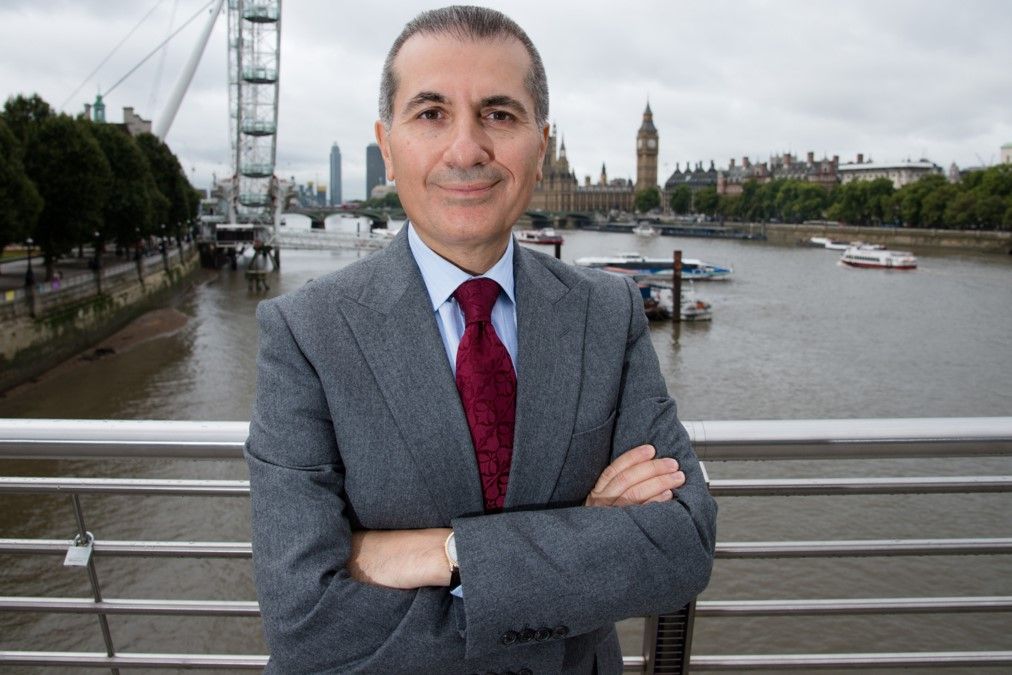
Achievements

Professor Medhat’s most prominent and impactful recent work is that of supporting and guiding NATO Allied Command Transformation (ACT) to innovate and embrace Digital Transformation (DT) to enable the Alliance to deliver the NATO 2030 Ambition and achieve full Multi Domain Operations MDO (Land, Sea, Air, Cyber and Space).

In 2023 Medhat was appointed Mentor to the Supreme Commander and his Flag Officers and General Officers (FOGOs). In addition, Medhat was asked by the NATO Digital Champion to outline the DT architecture for ACT and create the approach for implementation. Medhat continues to develop the NATO ACT capability to enable them embrace and introduce new and emerging technologies including Artificial Intelligence/Machine Learning capabilities amongst others. Medhat has introduced a number of recently published ISO standards related to Data Models for Artificial Intelligence and Machine Learning to ensure consistency and interoperability.

He delivered many training sessions that have directly impacted over 500 NATO personnel (as of Dec 2023). In addition, Medhat has addressed many NATO conferences such as the NATO Consultation, Command and Control (C3) Board in Lisbon that brought in representatives from across the NATO nations (Dec 2023).

Furthermore, he has developed a comprehensive immersive programme that prepares Warfighting in the Digital Age (which incorporated many key elements such as AI/ML, Cyber prevention and Zero Trust Architecture, Digital Processes and Apps Development).
In May 2024, Medhat was admitted as a Fellow of the Royal Society of Chemistry (RSC).

During 2023/24 Medhat, has and continues to support the Board of the Walton Centre NHS Foundation Trust and their neurological scientists, clinicians, and senior managers to develop a worldclass innovation capability underpinned by research and collaborations. Medhat also led the innovation benchmarking using the ISO 56002 Standard and the Investor in Innovations Framework.

Medhat spearheaded the re-certification and validation of DASA (the UK Defence and Security Accelerator) using the Investor in Innovations ISO 56002 (2019) Standard.

Some of Medhat’s most exciting Board Memberships include that of MoonXcribe – a new business that aims to preserve human culture on the lunar surface, and Piece Future – a Singapore based Intellectual Property Investment Bank.

In Nov 2022 (London) and March 2023 (Dubai), Medhat was a Keynote Speaker at the IoD Global Convention on Innovation Reshaping Economic Principles (Autonomous-Pull Economics), and Organisation’s Resilience through Innovation, respectively.

In December 2022, Medhat was invited by the UN Institute of Training and Research (UNITAR) to address a congregation of academic, political, and business leaders in GENEVA on the role of Innovation and Responsible Leadership in Business and Industry, which formed a key chapter (chapter 4 - Innovation and Responsible Leadership in Business and Industry) of the UN sponsored book entitled: Responsible Leadership: Essential to the Achievement of the UN Sustainable Development Goals, Edited By Prof Mike Saks.

During the COVID 19 Pandemic, Medhat was also invited by the UN to give a keynote address at an international gathering via zoom on Nov 13th, 2020, on the “Strategic Imperatives of Innovation and Responsible Leadership” – a key driver for hope and scientific determination to find a way out of the constrictions of the pandemic.

Medhat was invited by the Council of Engineering Professors to provide a keynote address on the how to use an innovation standard framework to drive knowledge exchange growth, value and impact.

Recognising the importance of Digital Transformation, Medhat developed the Digital Maturity Assessment Framework® in 2019, which has now been adopted by many Vocational, Education and Training Providers as well as businesses within the EU as part of an Erasmus Plus programme that included the participation of organisations from Spain, Finland, The Netherlands, and the UK.

Medhat’s educational charity, the STEM Foundation continues to play an important role in the benchmarking of STEM provision in colleges, strengthening the quality of offerings by FE providers and thus, enriching the quality of student experience. Medhat has led on the development of over 100 STEM Strategies for colleges (e.g., Belfast, Plymouth, Dudley, Southwest College, TyneMet, West Cheshire, Havering) and regions such as Cambridge and Peterborough and in the UK and continued to benchmark colleges STEM capability using the STEM Assured framework and standard.

Examples in Scotland include:
- STEM Regional Strategy for the for the Dundee City and the Angus Region
- STEM Strategy for City of Glasgow College
- STEM Strategy for West Lothian College (Feb 2015, and March 2018)
- STEM Strategy for Fife College (2018)
- STEM Strategy for Forth Valley College (2017)
And the College’s recognition of the impact of Medhat’s STEM Strategy. Page 9 para 3.4.

Examples in England include:
- STEM Assured for Myerscough College
- STEM Assured Luminate Educational Group
- STEM Assured for Educational Partnerships North East (Sunderland)
- STEM Strategy for Dudley College
- STEM Strategy for Plymouth College
- STEM Strategy for Tyne Met College
- STEM Strategy West Cheshire College
- STEM Strategy for Havering College
- STEM Assured South Devon College (Former Education Secretary Lord Kenneth Baker presented South Devon College with the STEM Assured award at a ceremony on Thursday 1 March)
Examples in Northern Ireland include:
- STEM Strategy for South West College Northern Ireland
- STEM Strategy for Belfast Metropolitan College Norther Ireland
- STEM Assured for Southern Regional College

In October 2019, Prof Medhat was asked by the then Innovation Director of the UK Ministry of Defence, Clare Cameron and Vice Air Marshall Rich Knighton (Deputy Chief of Defence Staff- Financial and Military Capability) to conduct Investor in Innovations (I3) to benchmark and validate the Defence Innovation Network of hubs that included MoD’s Defence Innovation Unit, DASA Innovation Accelerator, jHub Strategic Command, RAF’s Rapid Capabilities Office, Army Innovation, Royal Navy Innovation-DARE, Defence Digital amongst other innovation hubs. The primary drivers for this work were to identify the innovation gaps and provide recommendations that would help improve the overall innovation capability, value, and impact in Defence.

Medhat’s IKE Institute was a lead partner in an EU Erasmus project (Creative Engine) that included partners from: South West College (UK), Thomas More College (Belgium), Tknika (Spain), and Dublin City University (Ireland). Massive development of resources in innovation for the FE/HE sectors were developed and deployed.

In 2019, Medhat was elected member to the prestigious COSMOS club (1878) in Washington DC for the distinguished professionals, which included US Presidents (Herbert Hoover, William Howard Taft, Woodrow Wilson) Scientists and Engineers (Alexander Graham Bell, Charles M. Herzfeld, Arden L. Bement Jr. and Carl Sagan).

In 2011, Prof Medhat established the Institute of Innovation and Knowledge Exchange (IKE Institute) as the UK’s professional body for innovators to ensure innovation is seen as a Professional Discipline in its own right that requires knowledge, skills, and competency development. The Institute accredits, certifies, benchmarks, and provides research, development, training and mentoring in innovation and digital transformation, in such sectors as construction, defence, education, energy, health, infrastructure, manufacturing, nuclear, security, technology and transportation.

Guided by the Innovation Council, which brings together over fifty c-level executives from different economic sectors (e.g. 3M, AstraZeneca, BAE Systems, Bosch, Cobham, GXO, HPE, Microsoft, MBDA, Panasonic, Raytheon, Siemens, Thales...).

He defined with the Innovation Council the Institute’s Innovation Manifesto “Championing the People Who Champion Innovation”.
As an active member of both the ISO/BSI Innovation Management Technical Committee IMS/1 and the Artificial Intelligence Committee ART/1 as well as the BSI Defence Standardisation Committee DEF/1, Medhat has developed and contributed to the deployment and assessment of international standards to enhance professionalism, enable interoperability, and improve consistency and performance excellence.

For example, Medhat led the development of the Investor in Innovations® framework (2015) as a leading-edge integrated standard, which subsequently inculcates all the precepts of the ISO 56002 (2019) Innovation Management System and the wider ISO 56000 Innovation Management Series, to enable and offer organisations a practical way to assess, benchmark and validate their innovation capability.
Organisations such as BAE Systems (Air, Future Capability), Thales UK (including Transportation and Cyber), GXO Logistics-Virgin, MBDA Missile Systems (throughout Europe), Raytheon (UK), Panasonic (R&D in Singapore), Abellio (Greater Anglia TOC - Train Operating Company) are some of the example recipients of the Investor in Innovations Standard.

In November 2013, Medhat’s evidential research work with the FE sector underpinned the Government’s Chief Scientific Adviser for the Department of Business, Innovation and Skills (BIS), Professor John Perkins’ Report, which identified the need to improve the UK’s engineering talent pipeline and the chronic technical and scientific skills-shortages threatening the livelihood of many UK businesses.

Medhat has held many nonprofit charitable roles such as Trustee of Reading College and Governor of Activate Learning Group of Colleges, Schools, Academies and University Technical Colleges, Governor of East Berkshire College, Member of the South East University Physics Network SEPnet chaired by Sir Bill Wakham (2010-2015), Member of the Industry Advisory Board for JISC (Academic Joint Information Systems Committee).

He also continues to contribute to National Enquiries and input to National Policies.
Examples of Contributions to National Policies:
- Open Innovation in STEM Learning Study Report by Medhat’s IKE Institute
- The Value of Digital Capability in Economic Terms for the UK – Evidence Written evidence (DSC0046, 5 Sept 2014).
- Digital Skills For Tomorrow’s World: Inquiry Chaired by Maggie Philbin, July 2014.
Medhat’s work on STEM education and policy reforms was cited by FE News in their articles:

The seminal piece of evidential research ‘Inventing the Future’ (2014), looked ahead to 2030 to imagine the future skills that would be needed. Due to its precision in future-sighting industrial skills needs, this research, which Medhat led on, has been cited numerous times over the past decade. A further research project led by Medhat, ‘Shaping the Future of STEM Skills’ (2017) for Greater Cambridgeshire and Greater Peterborough Educational Partnership and ACER, supported and funded by EC European Social Fund, envisioned the type of STEM skills for next decade and beyond.

References by Universities and Researchers
Medhat’s aforementioned research in Future Skills was cited by many academics and research students. Examples include:
- Impact on Work-based Learning (Manchester Metropolitan University’s Centre for Enterprise) Professor Lynn Martin, Director of the Centre for Enterprise, Autumn 2015.
- Engineering Students in Transition: The Academic and Vocational Divide - A thesis by Candice Jane Downie, University of Bolton for the Degree of Educational Doctorate May 2020.
- Citation in the House of Lords: Colleges offer a wide variety of qualifications and therefore have a significant influence regarding the teaching and future of digital skills, as they can bring forward the next generation of industry-ready employees (Medhat, 2014; House of Lords, 2015).
- Public Engagement - Hazards Forum (page 11).

Medhat campaign to promote STEM Careers in the Guardian Newspaper and live Media Round Table Q&A with the public continued over few years:
- Filling the Stem skills gap- routes into clean technology careers (15 Jul 2010)
- What will be the next great invention? Ask a teenager (9 Jan 2013)
- A panel session with Prof Medhat, chaired by Kerry Eustice from the Guardian Newspaper

As the Vice President of Future Media Plc – a NASDAQ listed technology business, Medhat transformed the company’s structure and innovated its offering to enable it to embrace the then emerging dot.com business model and introduced a new range of ‘first in class’ digital systems (for example, new developments that accelerated time to delivery for pharmaceutical companies through the deployment of relational and intelligent database management systems – Pharmaceutical Visions, Autumn 2001 – From Speed to Competency to Hitting the Market).

As a founding Director of UK Engineering and Technology Board (ETB) responsible for Education, Policy and Innovation and overseeing the Engineering Council role in reforming the Engineering Profession, Medhat conducted national research studies to review the Professional Qualifications in Science, Engineering and Technology and their structure (e.g., Response to EC UK’s Review of SARTOR UK-SPEC Development). One of the many disappointments of SARTOR 3 had been the failure of the new standard to galvanise enthusiasm for the Incorporated Engineer grade of registration. As a result a working group was set up, chaired by the ETB’s Director, Prof Medhat in April 2003. The Panel researched the demand for, and the perceptions of a “new” professional title of “Technologist”.

Working closely with his Chairman, Sir Peter Williams FEng, Medhat articulated the Engineering Profession’s response to Government and other National Consultations that became the bedrock for elevating the role of the Technician in the UK (e.g., The Lambert Review of Business University Collaboration, HEFCE Funding Proposals and impact on Engineering, The Tomlinson Qualifications Review).

Medhat provided evidence-supported advice to the Minister of Science and Innovation (Lord David Sainsbury) to inform policy making, and has conducted many national research studies in innovation and productivity and has provided evidential responses to Government and other National Consultations (e.g. The DFE Science Curriculum Review, Innovation Nation Whitepaper, and the Race to the Top Sainsbury Review).
For example, Medhat’s New Engineering Foundation Report “Skills for Climate Change: Meeting the Low Carbon Challenge” launched on 28 Feb 2009 in London offered both the inspiration and skills guidance for many of the London FE colleges, HE Institutions and Government. It provided evidence for the Government Paper Skills for Green Economy.

Medhat also provided evidence in Parliament’s House of Commons Innovation, Universities, Science and Skills Committee – Engineering: turning ideas into reality Fourth Report of Session 2008–09 to support national reforms in STEM education.

Medhat’s views about “Tapping Young Potential: Are We Investing Enough in Science, Engineering and Technology?” (2003) can be found on Research Gate. The FT also cited Medhat’s concerns over the diminishing role of maths and science in education in his letter to the Financial Times: “Revitalising science is key to our future (22/08/03)”.

As member of the HEFCE Board’s - Quality Assurance in Learning and Teaching (QALT) Committee (2002-2007), Medhat was instrumental in protecting the unit funding level for Engineering-related disciplines (Chair, Sir Peter Scott). Medhat was involved in the design and evaluation of the Centres for Excellence in Teaching and Learning (CETL) initiative in 2003. Medhat was subsequently invited by the Engineering based at Loughborough University to guide and support the Centre Director Prof John Dikens. Medhat worked closely with Dr Robert W Ditchfield the Education Director of the Royal Academy of Engineering at the time to ensure a fresh approach to work based and experimental learning can be further developed in the engineering disciplines. In Jan 2007, Medhat was asked to lead a review and assess the progress of Work-Based Learning strategies in Higher Education Engineering Programmes.

In addition, Medhat was involved in ensuring the case for FE to deliver vocational HE qualifications was strongly made by working closely with Dr Liz Beatty-HEFCE, Director of Learning and Teaching. Medhat was involved in the setting up and interviewing of the first Chief Executive of the HE Academy, Professor Paul Ramsden.
Medhat established the New Engineering Foundation (NEF) in 2004, which subsequently was renamed to the UK STEM Foundation as a national educational charity that supports continuing professional development of STEM (Science, Technology, Engineering and Mathematics) Teachers/Lecturers in Further Education Colleges. He secured over £7M in charitable donations (e.g. Gatsby Charitable Foundation, QIA, LSIS, RDAs and donations from business and industry) to create and run the NEF Industrial Fellowship Scheme for FE STEM Lecturers enabling them to spend three weeks on industrial placements and upskill their knowledge in scientific and advanced manufacturing areas.
Medhat introduced the first UK-wide Masterclass Programme for FE (e.g. Composite Materials, Precision Engineering; Navigation; Digital Engineering Systems; Composites; Electronics; Control Engineering; Engine Management Analytics and Powertrain Systems) in partnership with many businesses such as Airbus, Areva; MBDA Missile Systems; Thales; BT; Boots; National Grid; EDF Energy; Rolls-Royce; DuPont, BASF resulting in a positive impact that benefited over 700,000 post-16 FE students, according to independent assessments by the Government Agencies Quality Improvement Agency (QIA) and subsequently the Learning & Skills Improvement Service (LSIS).

Medhat led the FutureTech programme, supported and funded by LSIS in 2009/2010, to develop and build much-needed capacity and capability, as well as leverage new and emerging technologies at technician level, thus minimising the disconnect between the technological change and college provision. The programme was made available throughout the UK FE sector, and the drive was to engender dual professionalism in lecturers ensuring that they were both proficient in pedagogy and their technical disciplines.

Medhat’s interest in fusing Science, Art and the Public was also demonstrable in his continued sponsorship of the PAWS/ EuroPAWS/ Omni Communications awards of TV Drama productions (e.g., 2009 MIDAS Prize for the Environmental Science and Technology in a European TV Drama or Documentary - which was won by Thomas Weidenback and Shi Ming for their inspiring film ‘Countdown on the Yangtze. The sponsorship prize was presented by Prof Medhat at the IET on 23 Nov 2009.

Further confirmation of Medhat’s background, participation in positively influencing education and policy reforms was cited in the Parliamentary Memoranda of Evidence (Engineering) - Memorandum 20 (pages 135-143 ) Feb 2008.


Medhat, also led the development of the “Nuclear Assured” framework and standard in partnership with the National Skills Academy for Nuclear (NSAN), and directly conducted skills assurance (on almost all the civil nuclear sites in the UK from Dounreay in Thurso in Scotland and Wylfa on Anglesey, Wales to Hinckley Point in Southern England) and their site-operators including Magnox; Sellafield; RSRL; DSRL; EDF Energy, Areva and many others.

Medhat served on many Boards and Committees to improve STEM education, skills development, and continuous improvement at national and sectoral levels (e.g., Council for Industry in Higher Education, Qualification and Curriculum Authority QCA’s Engineering Skills Committee, SETNET (member of the board chaired by Lord Ron Oxburgh) , Engineering Council (UK) Board (chaired by Sir Colin Terry), UNESCO UK Science Committee, Edexcel Policy Group, Bristol University Court, FDF (Foundation Degrees Forward) Management Board supporting their CEO Prof Derek Longhurst, Parliamentary and Scientific Committee, Governor of Oxford and Cherwell Valley College of Further and Higher Education (now Activate Learning), Vice Chair – Accredited Skills for Industry Awarding Body, and was also a Parton of Walsall College, JISC (Joint Information Systems Committee for FE/HE), amongst others. Since 2008, Medhat has served as a member of the Scientific and Parliamentary Committee informing and guiding parliamentarians and Whitehall representatives on scientific and technological developments and their impact on policy formation.

To broaden dissemination of STEM related innovations and practices, Medhat composed and fully sponsored the SciTech Innovation Conferences ‘Innovisions’ that enabled engagements between STEM educators, practitioners, and Government Ministers, as well as senior leaders from business, industry, and education. Examples include:
Innovisions 2014
Innovisions 2012

As of January 1st, 1997, Medhat was appointed as the founding Chief Executive & Principal of Dubai Polytechnic and subsequently secured a University status (University of Dubai) from the UAE Ministry of Higher Education and a Royal Decree. Built the educational infrastructure and recruited faculty academics for five academic schools and support services together with laboratories, libraries, and other learning resources within the first 9 months. Introduced for the first time in the UAE the ability for co-education at higher education level.

Medhat’s close engagement with industry secured him two endowed Professorial Chairs: The IBM Professorial Chair in Concurrent Engineering (1995-2000), and the Intergraph Chair of Electronic Design Automation. He became Head of School of Electronics responsible for several thousand students and hundreds of faculty staff. Significantly contributed to the transformation of Dorset Institute into its next phase of Bournemouth Polytechnic and subsequently, Bournemouth University in 1992. Developed the UK first Masters programmes in VLSI Design, Concurrent Engineering, and Systems Engineering with extensive industrial sponsorships and endorsements.
In 1996, Medhat was also elected as a Fellow of the Institution of Electrical Engineers (now IET) and in 1997 he was also elected Fellow of the Charted Management Institute and the Charted Institute of Marketing.

During the academic year 1995/96 Medhat was appointed, Bournemouth University’s first Head of the Office of Research and led the university’s first submission under the Research Assessment Exercise (RAE) in 1996.
In April 1996, Medhat was asked by the UK Department of Trade and Industry (DTI) to examine the viability of establishing a British educational institution in the UAE as part of the Dubai Chamber of Commerce and Industry.
Appointed Director of Microelectronics in Business for the South West of England by the UK Department of Trade and Industry, with a view to broadening the take up and application of custom silicon designs (ASICs) by industry in the region.

Secured an ESPRIT- TTN (DGXIII - 21172) project with a value in excess of £800,000 to Promote Access to Components, Subsystems and Micro-Subsystems for Industrial Competitiveness in Europe. He was successful in achieving three EC-funded TEMPUS projects in the design of electronic circuits and systems for signal processing in information and telecommunication technology, in partnership with Katholieke Industriele Hogeschool of Oostende, Czech Technical University of Prague, Technical University of Brno, and University of Bratislava.

Medhat’s PhD was focused on the novel approach of using VHDL as a High-Level Language to model and automatically insert testability infrastructure (JTAG) into VLSI custom silicon designs (1993). The research work was fully sponsored by Siemens Plessey Defence Systems and subsequently embraced by semiconductor manufacturers including Philips and TI at the time. Oversight of the PhD was provided by Southampton University’s Brian Wilkins and Huddersfield University, Professor Ted Pritchard.

In 1992, Medhat was elected as the Vice-Chairman of the DTI UK Electronic Computer Aided Design Initiative – EEUG Committee to negotiate on behalf of the Higher Education sector, the acquisition of Silicon ECAD tools from vendors (Silvar-Lisco, Cadence, Mentor Graphics), thereby ensuring their wide spread adoption in chip design and providing a knowledge exchange platform for lecturers to maximise shared experiences and benefits.

Medhat served on many Boards and Committees to drive new practices in engineering, productivity and innovation (e.g., Member of the Philips Educational Programme in the UK, Member of EC-EUROCHIP Executive Board- Programme Committee, Member of the EC- ‘Simulation Action’ Working Group in Concurrent Engineering, Member of EC COMNET Working Group on CEE (Continuing Engineering Education), Member of the UK Year of Engineering Success Programme with a National role, Member of the Transnational Steering Group of Dorset- CRITT, (Centre Regional d’Innovation et de Transfert de Technologie, Normandie), and Member of the South Coast Metropole Steering Committee. The impact from being on all of these committees was to forge and enable effective collaboration generating economic development and social benefits.

Enthralled by the notion of engineering entrepreneurship, Medhat established his first technology integration business, Data Tech, in 1986 to design and deliver engineering solutions for businesses in the Dorset, Hampshire and Wiltshire region working closely with such companies as Edgley Aircraft (Optica), Philips Semiconductors, Plessey Defence and Schlumberger ATE).

Whilst working, Medhat pursued and completed his MPhil (1989). His research focused on the emerging development of Gate Arrays using novel Electronic Computer Aided Design Systems and Design Methods. Over 40 novel Gate Array Designs including mixed Digital-Analogue devices were completed and prototyped for commercial and military applications (e.g. Autopilot and Radar System). Voted as Vice Chair of the UK Electronic Computer Aided Design (ECAD) Initiative to introduce the application of ECAD into the education sector. Became Head of Dorset Institute’s Electronic Industrial Unit (EIU).

In 1989, Appointed Associate Head of Department of Engineering. Organised and participated in many IEE colloquia and conferences. Secured a South-West Region First – the EEC funded Technology Transfer project under the SPRINT (Strategic Programme for Innovation and Technology Transfer) when the UK participation was nominal.
Served as an EC Adviser for Sharp Micro Electronics - (Argon Laser and Fabrication Chamber for Gate Array Devices)- Hamburg, Germany.

In 1989, Medhat was also appointed Professor at the age of 27, the second youngest Professor in the UK at that moment in time - (the professorial appointment Panel Chaired by Dr Bernard MacManus (Vice-Chancellor) and included Sir Robert May (Subsequently, Lord May of Oxford, Royal Society) and Baroness Caroline Cox, (Chancellor and Deputy Speaker of the House of Lords).